By Katy Malone, Conservation Projects Manager (Scotland), Bumblebee Conservation Trust
Before you read this article, Katy would really love it if you could take this quiz first… Don’t worry if you don’t know all the answers yet (don’t cheat!), you’ll get another chance at the end. Bumblebee Conservation Trust would like to find out if your views change after reading the article.
I was already a seasoned wildlife surveyor in my early 30s when I was first stung by a bumblebee. It was resting on a mossy tussock that I chose to sit on to eat my lunch (ouch!). Actually, the pain wasn’t too bad, and my first thought was, “Oh no! the bee’s going to die now it’s stung me…” But, I stood up – and I saw it fly away – and I was very relieved that the bee was still very much alive.
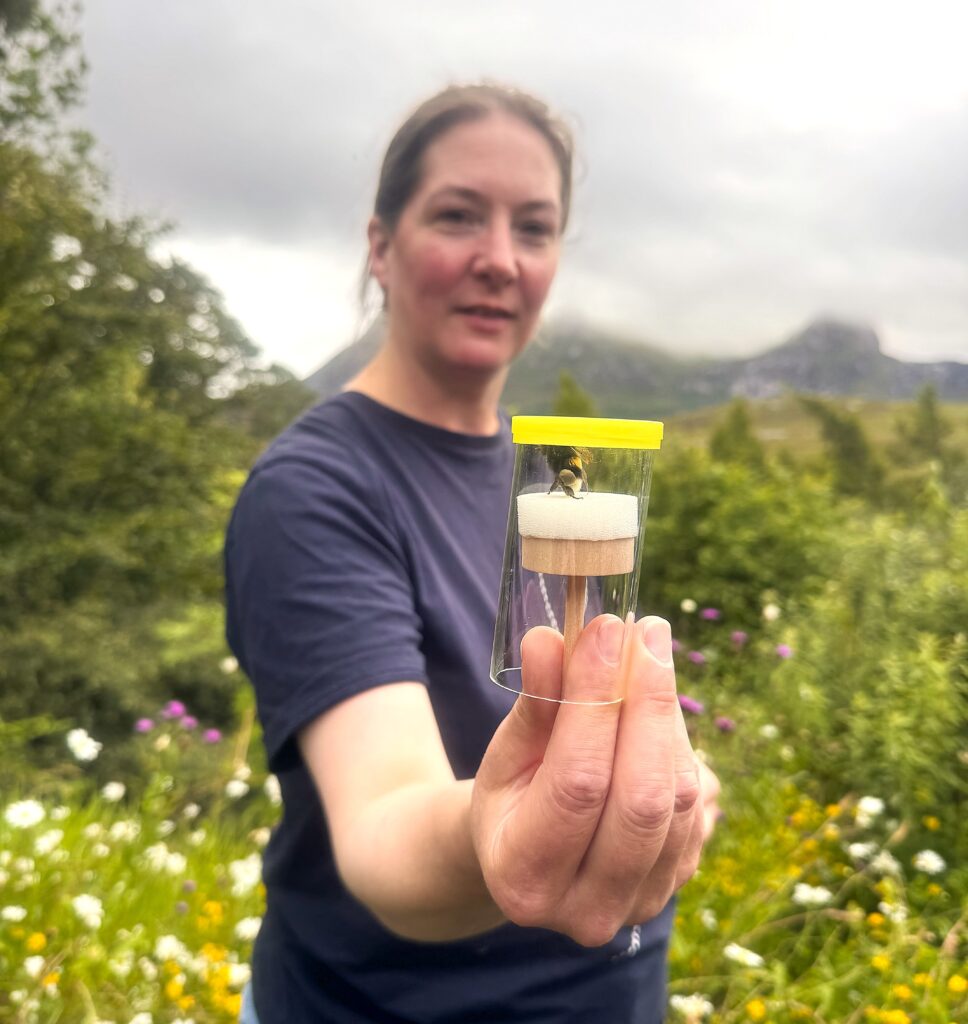
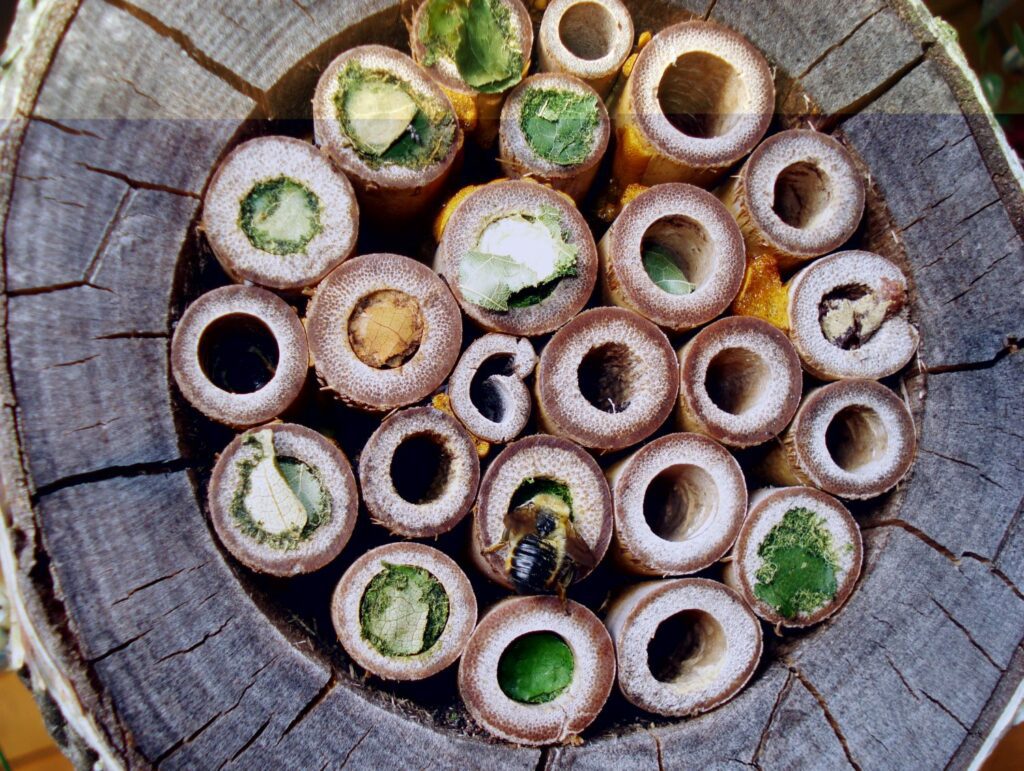
I later learned that so much of what we think we know about bees, actually only relates to a single very well studied species – the honeybee (Apis mellifera). There are so many other bee species in the UK, around 270 in fact! There are bumblebees, mining bees, mason bees, plasterer bees, nomad bees and more. They all have wonderfully different and unique ways of living. There are three species of bee that only nest in empty snail shells! How amazing is that?! Only one of those 270 species is the honeybee, and it’s the same species across most of Western Europe.
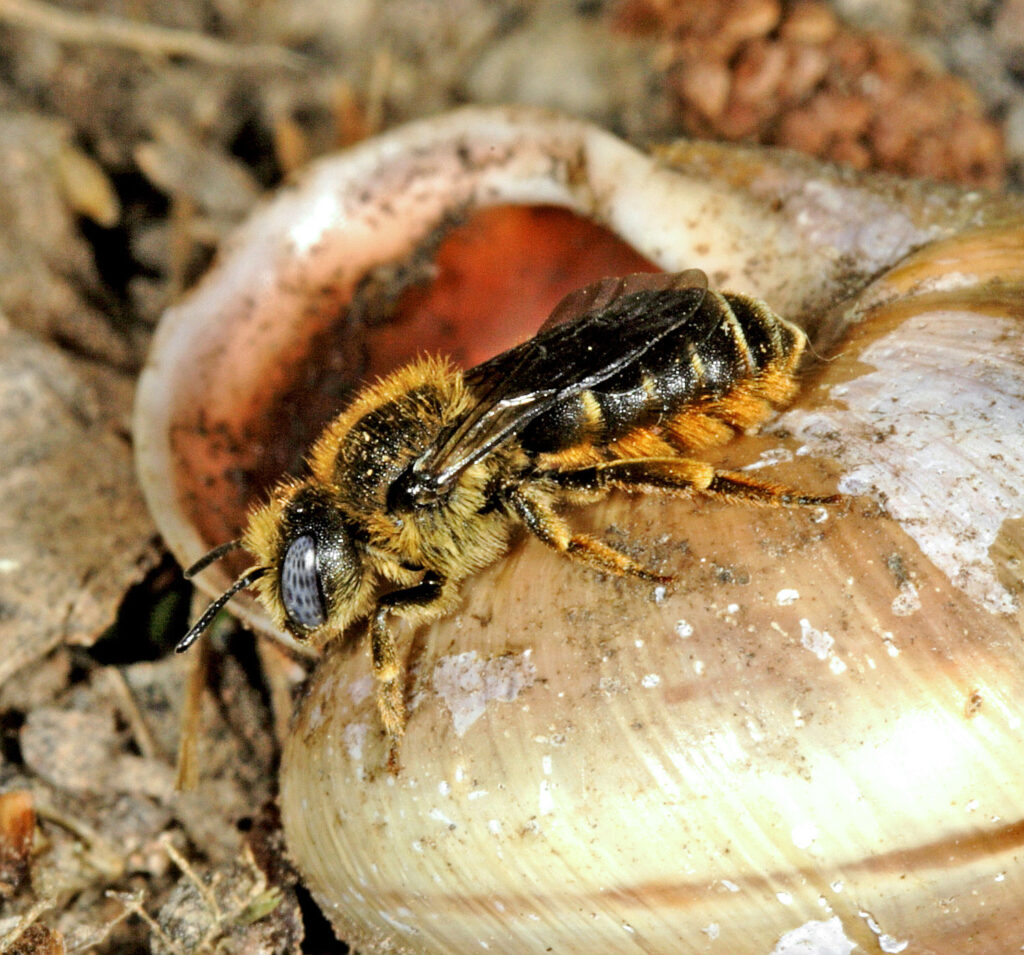
(Photo © Jeremy Early)
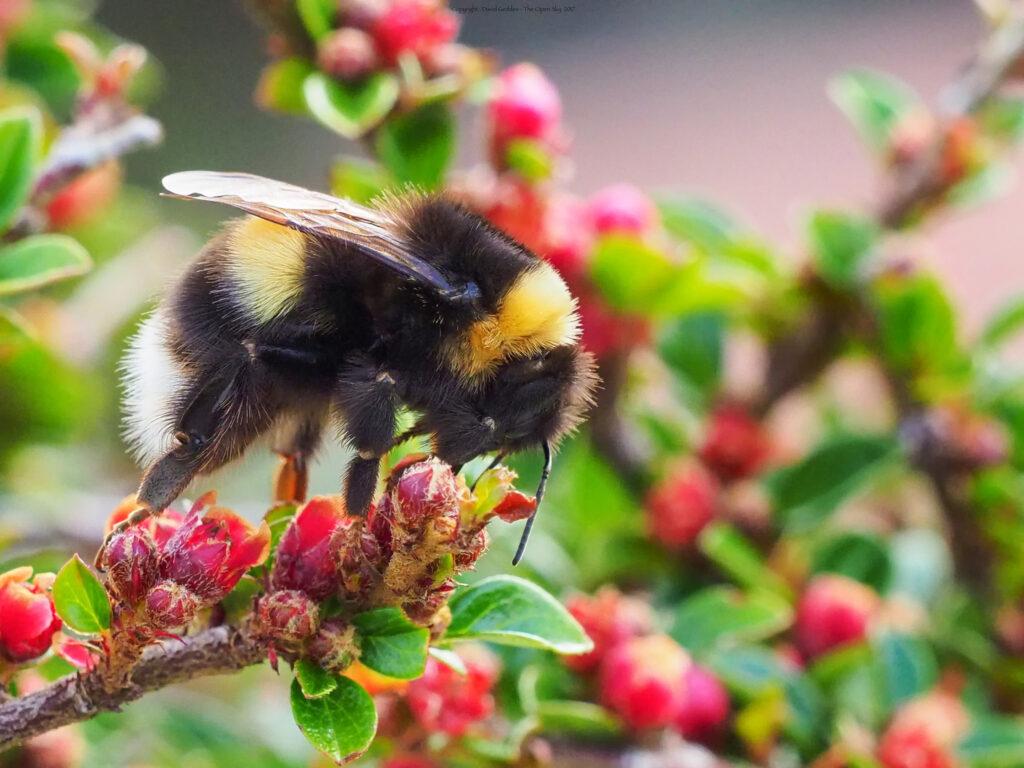
(Photo © David Geddes)
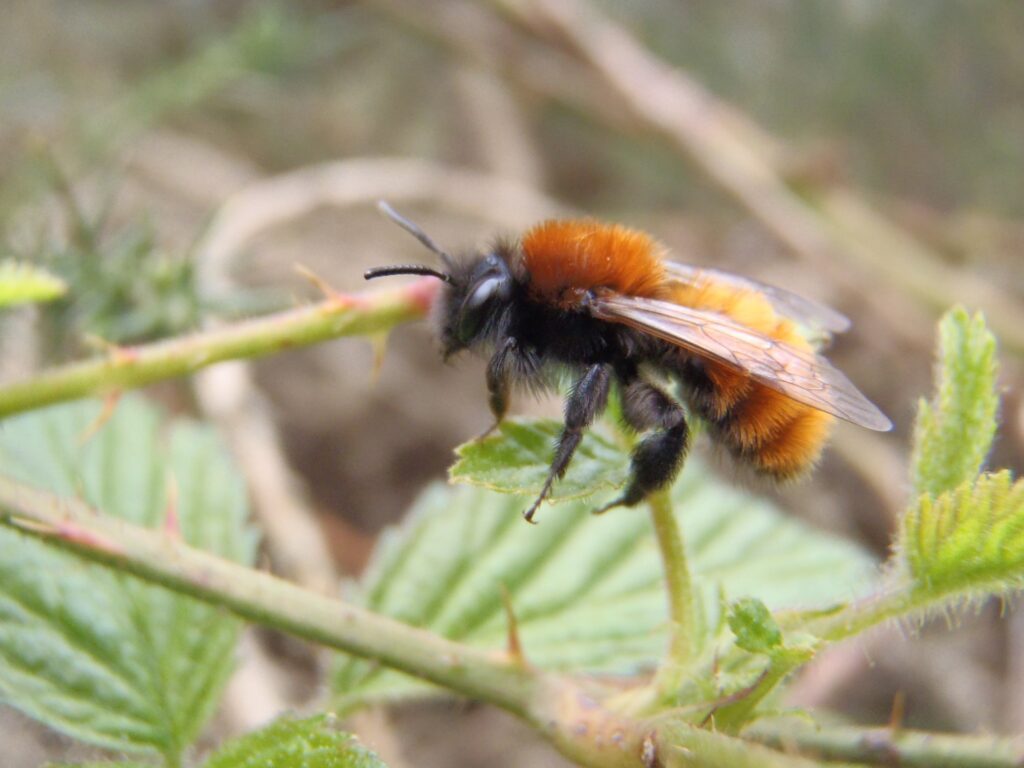
(Photo from Bumblebee Conservation Trust)
(Photo from Bumblebee Conservation Trust)
Most honeybees are cared for like chickens.
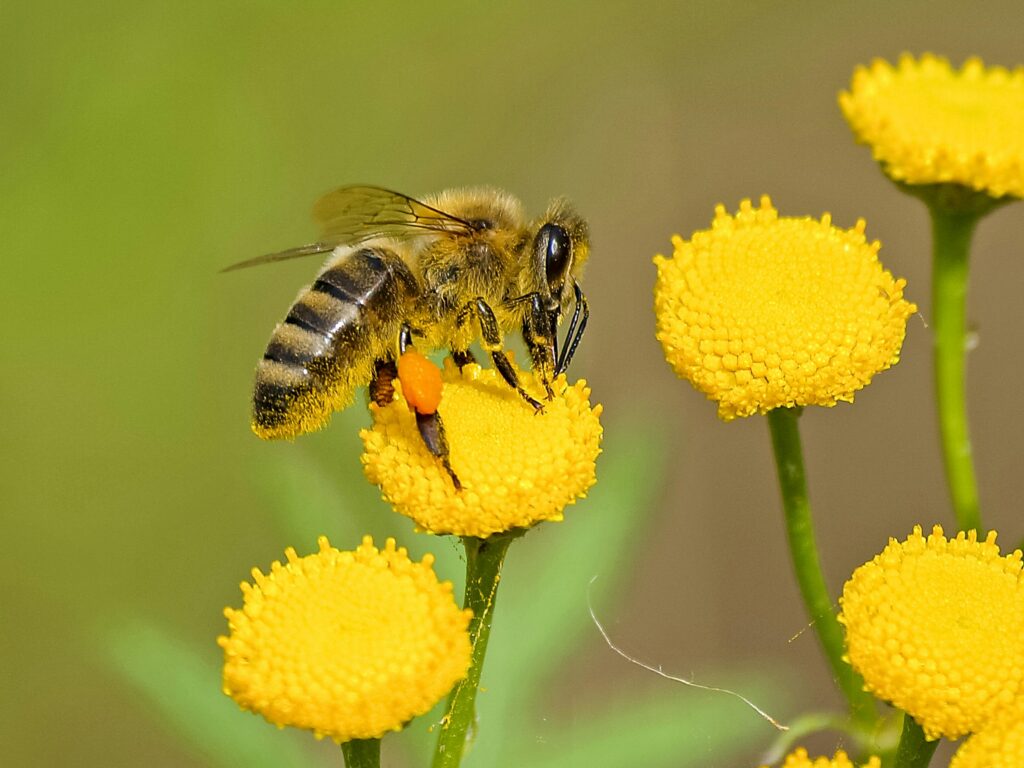
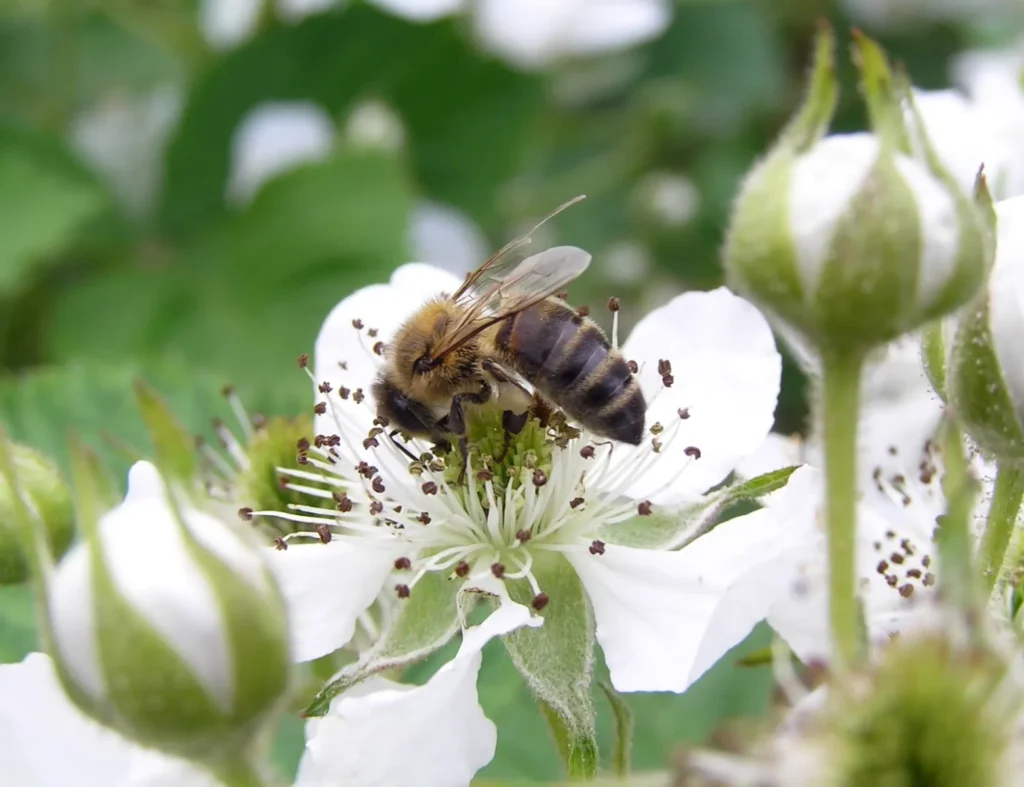
The honeybee (Apis mellifera) is a very common species because it’s population is not limited by nesting space or food availability. The vast majority of honeybees are cared for by beekeepers, who house them in artificial hives, feed them with sugar syrup and fondant when necessary, and will usually try to stop their natural urge to swarm and fly to new areas, to ensure a crop of lovely honey at the end of the season. Honeybees are essentially commercial, semi-domesticated livestock, much like chickens.
There are numerous subspecies of the honeybee, such as the British Black Bee (Apis mellifera mellifera), which is thought to be better adapted to our cool climate. These are now quite rare because they hybridise freely with other honeybee subspecies kept by beekeepers. The British Black Bee could be classed as a rare breed, similar to rare breed chickens or cattle, but is not a true species in the biological sense.
(Photo CC0)
(Photo CC0)
Does keeping honeybees help to save wild bees?
I learned a lot from beekeepers over the years, and ended up keeping some hives myself, so I truly understand what fascinating creatures honeybees are. Of course, the honey is also a bonus. But as a nature conservationist, I now also know it’s unfair to our wild pollinators that when people want to ‘save the bees’, they might consider keeping a hive of honeybees as a positive contribution. To me, that’s like wanting to ‘save the birds’ by keeping chickens. It’s well intentioned, but there are so many more effective ways to save the wild bees and other pollinators that need our help. We need a diversity in our pollinators to pollinate wildflowers and plants which underpin entire ecosystems, and our crops which are essential to our own quality of life. (Have a read of this research if you want to learn more).
Some very worrying recent research makes a compelling case that honeybees can actually be detrimental to wild pollinators, due to competition for food and transfer of diseases. (See this paper, for more information). Disease risks come from the non-native parasitic mite called Varroa (Varroa destructor) which many honeybee colonies suffer from, and which beekeepers manage using treatments. There’s bad news and good news for bumblebees on this front:
- Good news: bumblebees are not directly affected by Varroa mites.
- Bad news: Varroa mites carry diseases that can affect bumblebees, and these can be transmitted when a honeybee and bumblebee visit the same flower.
So, what should we do?
As a beekeeper myself, I don’t want to put anyone off beekeeping – it is a very rewarding hobby! Just, please first consider the needs of the wild pollinators in your area.
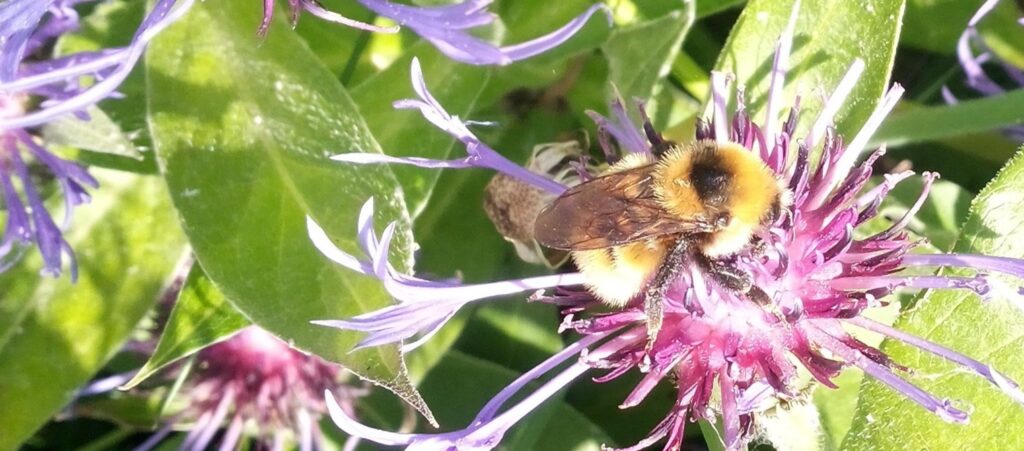
Lots of pollinators, including bee species, are threatened by a lack of high-quality, flower-rich habitats, and we can all do something about this in our gardens, parks, meadows and road verges for example. Planting more flowering plants – especially wildflowers (but many garden plants too) is valuable, and managing wildflower meadows benefits a whole range of species including wild bees. One particularly rare species that is relevant in north Scotland is the Great Yellow bumblebee (Bombus distinguendus). It was once widespread across the UK but is now only found on Scottish islands and coasts – north Sutherland and Caithness are its last known mainland sites. You can find out more about this species and how to help it here. Look out for meadow management tasks at Farr Glebe Bumblebee Meadow in Bettyhill – these are advertised on the group facebook page.
…and if you are thinking about keeping bees
The Bumblebee Conservation Trust recommends a precautionary principle when siting honeybee hives
- Avoid placing hives close to nature reserves and other areas where nature is protected (bearing in mind that honeybees will forage up to 3 miles away from their hive).
- Avoid keeping honeybees in areas with rare wild bees (such as parts of the north Scotland coast where we still have Great Yellow Bumblebees).
Buglife recommends increasing the area of flowers available before putting in a hive – they recommend at least an additional 2 hectares per hive – this can be achieved by encouraging more flowers in gardens, meadows and woodland.
For more information, please have a read of The Bumblebee Conservation Trust’s evidence-based Honeybee position statement, Buglife’s overview, and NatureScot’s guidance.
We hope you found this article interesting! Now that you’re here, how about retaking that quiz that you did at the beginning, using this link. Would you change any of your answers? Thank you!